Powered by Smartsupp Indication Instruments, Author at Indication Instruments Ltd. - Page 4 of 5
Analog vs Digital Instrument Cluster: Key Differences Explained
Analog vs Digital Instrument Cluster: Key Differences Explained

What Is a Tachometer

How did instrument clusters evolve ?

Over our almost five decade journey, we have had a front row seat to the evolution of dashboard instruments, in trucks / buses / tractors / construction equipment and industrial markets. The pace of change was very slow to begin with, but has really become much faster in recent years. The drivers have been regulations and also general spread of technology into every day life which has created a demand for more and more features.

When our company began in 1976, there were very few clusters in our markets. Round gauges dominated. And among them, mechanical gauges occupied a position of pride. Good accuracy, robustness and no need for external power. The aesthetics were very pleasant too. However, they were not easy to make, and our highly skilled operators helped us dominate that market. Nor were they cheap, since apart from high labour content, many of them used expensive materials, which led to the heavy duty construction. They needed a lot of effort to fit at customer end too, since each gauge had to be mounted individually.

The first transition was to electrical gauges ( still round), driven by inputs from sensors, which gradually led to electronic round gauges too. the complexity of fitting these at customer end went up, since now electrical connections had to be made individually too.

However, the round gauges were very serviceable, and required low NRE charges to customise, so they were well suited to the production volumes of the times.

The first instrument cluster was simply a sheet metal panel, with round gauges mounted on it, and a small wire harness to make the connections. the customer could instal it just by plugging in a matching connector and tightening four screws.

However, the high number of connections ( mechanical and electrical), most of which were manually done, led to chances of errors in the manufacturing process. And also were the weakest points in the system as far as reliability was concerned.

So, this led to a more integrated ( but still with an analog front end) cluster, with very few manual connections, and much better aesthetics.

What is a modern analog instrument cluster and what are its advantages ?

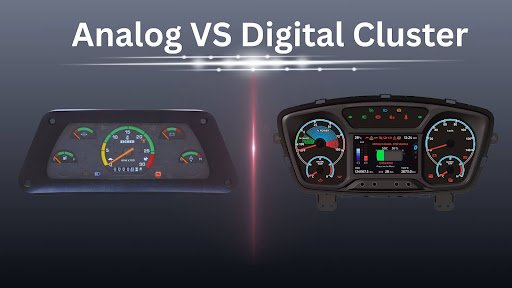
A modern analog instrument cluster comprises pointer driven gauges, hard wired tell tales symbols and an LCD display which can have an odometer, trip odometer , clock etc. So technically, the cluster displays both analog and digital display, but since pointers occupy the largest chunk of the real estate, we still call it an analog cluster. Over time, the front end stayed analog, with moving pointers, but the back end kept getting more and more high tech. small LCD displays replaced the figure wheels in the odometer, PCBs replaced the wire harness and stepper motors replaced the air core movement. The number of tell tales grew with increasing regulations, and lighting soon became LED driven. Leading to a highly reliable, very nice looking product, which a driver could read pictorially at a glance. In other words, the driver just had to take a quick look, and if all the pointers were close to the centre ( and no tell tales flashing), he knew there was nothing wrong.

The back end of the cluster is partly digital in some cases too, taking inputs from a J1939 protocol data bus, but when we say analog cluster, we refer to the front end.

Things were going well for the analog instrument cluster, and they were leading to a smooth driving experience. They enjoyed the following advantages:

  • Simplicity: Analog clusters are easy to understand, as they have been used for decades and also have a pictorial view
  • Low cost: They are cheaper to maintain and produce.

What is a Digital Instrument Cluster and how did they become popular ?

Digital instrument clusters replace the pointers, LCD and the tell tales with a single LCD or TFT display.

The inputs to the cluster are usually a mixture of analog and digital inputs, but as long as the display is digital, the cluster is considered digital.

TFT clusters embody the spirit of digital clusters and all they can do, so going forward we will treat TFT clusters as digital clusters.

So, analog clusters were dominating the market, but as vehicles became more complex, software driven and connected; the users need for information, more features and personalisation grew. Analog clusters could display fixed parameters, and it was expensive to customise the front face even for bulk production, plus personalisation was not possible. The rise of smartphones ensured that users were now comfortable with the digital display.

What are the advantages of digital clusters

These systems use software-driven interfaces that can integrate speed, navigation, infotainment, ADAS (Advanced Driver Assistance Systems), and even smartphone connectivity, all in one customizable screen.

Advantages of digital clusters:

  • More Functionality : digital clusters can connect with phones to offer navigation, with cameras to show videos, apart from the regular functionality of engine based parameters
  • Better accuracy and reliability : Since there are no moving parts in the digital cluster, accuracy is higher. There are no parallax errors in digital displays too. Reliability much higher too, since there is no wear and tear due to moving parts.
  • Better visualisation & more information : The screen is programmable, so it offers possibilities of pop – ups, etc. making important information more visible. The TFT screen can be scrolled to offer many screens by swiping / buttons, showing a wealth of information. All this information can be displayed without cluttering the dashboard.
  • Easy Driver level Customization: Drivers can choose between display modes, layouts, and color schemes
  • Integration with other devices: Digital clusters can work seamlessly with infotainment, navigation, and connected vehicle systems.
  • Modern aesthetics: Sleek, futuristic visuals align with today’s design standards for electric and premium vehicles.
  • Cost saving opportunities: The electronics used in the cluster is more powerful, since it needs to drive the TFT. While on a standalone basis, this can be more expensive, but this more powerful electronics may be used to combine features of other vehicle electronics , and leading to cost saving opportunities
  • Higher sales / margins for OEM : A TFT display creates a more high technology look for the entire vehicle; plus it offers a high number of extra features. This can lead to higher sales or higher margins or both for the OEM.
  • Less expensive factory level customisation: New variants can be without any changes in the electronic hardware, merely by changing the software.

Limitations:
Digital clusters can be more expensive to develop and may require higher processing power. Prices of TFTs are still high though they are coming down. And sometimes, people prefer an analog cluster for the aesthetics, similar to the trend in the wristwatch industry.

How Indication Instruments is Powering the Transition

At Indication Instruments Ltd, we are proud to be part of this evolution from analog to digital. With decades of experience in designing reliable analog gauges, we’ve leveraged that expertise to develop advanced digital and hybrid clusters that combine tradition with technology.

Here’s how we’re making it happen:

a. Hybrid Instrument Clusters

Understanding that not every market or vehicle segment is ready for a full digital shift, Indication has developed hybrid clusters, combining traditional analog dials with digital displays. This offers the best of both worlds: familiarity with modern functionality.

b. Customizable Digital Displays

Our digital clusters feature fully customizable interfaces, allowing OEMs to tailor layouts, themes, and data visuals. From high-end luxury dashboards to rugged commercial vehicles, we design solutions that reflect each brand’s identity while enhancing user experience.

c. Precision Engineering and Testing

All Indication clusters undergo rigorous validation, calibration, and reliability testing to meet international automotive standards. Our facilities are equipped with AI-driven test benches and simulation tools that ensure consistency, accuracy, and durability.

d. Scalable Technology for OEMs

We offer scalable platforms from entry-level displays to advanced clusters, ensuring flexibility for automotive manufacturers. Our modular architecture allows for easy integration with telematics, CAN systems, and AI-based driver information systems.

FAQs

1. Is the future of clusters fully digital ?

As vehicles become increasingly connected and autonomous, digital clusters will continue to edge past analog clusters. With new changes in technology, we can see digital clusters evolving into more advanced versions such as HUD displays which project on the windscreen. Some people feel that when vehicles turn fully autonomous, there wont even be the need for a display, but that doesn’t seem too likely. We can also expect some sort of a comeback from the analog cluster too, if the watch industry is any indication.


What Is a Tachometer and How Does It Work in a Vehicle?

What Is a Tachometer and How Does It Work in a Vehicle?

What Is a Tachometer

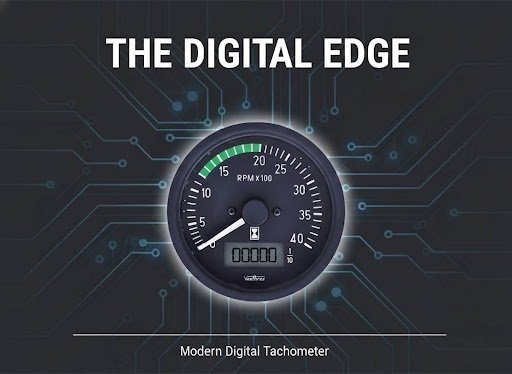
A tachometer measure the RPM of petrol and diesel engines. It takes an input from various signals like ECU / ignition coil / alternator or a magnetic pick up sensor , filters the input and converts it internally to drive a pointer or a digital display to indicate the RPM.

What applications / vehicles does IIL make Tachometers for ?

IIL makes tachometers for use in mobility as well as non mobility based applications. A tachometer can be used anywhere where there is a petrol or diesel engine being used. Mobility applications include on road applications such as specialty cars, hot rods, trucks and buses; off road applications such as farm equipment, tractors and construction equipmemt. The stationary or non mobility applications include generators, compressors and many other applications using IC engines.

Purpose of Tachometers in Vehicles

Tachometers measure speed in revolutions per minute (RPM). These give the user real time RPM of engine while driving the vehicle or operating the equipment. In case of mobility based applications, they can help the driver avoid over-revving, make the proper gear shifts, and preserve fuel efficiencies, hence improving driving performance and extending engine life . In case of race car applications, the driver may want to rev the engine as high as possible and the tachometer helps give him the adrenaline high bby indicating how high the RPM went. In stationary applications, the tachometer is a useful preventive or even predictive maintenance tool, since over-revving trends may indicate clutch or transmission issues.

How Does a Tachometer Work?

There are two kinds of tachometers in terms of input, i.e. mechanically driven and electronically driven tachometers. Mechanical tachometers accept input from the engine thorugh physically rotating flexible cable which is usually mechanically inserted inside the tachometers. This is an old technology, so we wont go into further detail.

Electronic Tachometers in turn can be further divided into two categories, i.e. those which accept analog signals and those which accept digital signals. Analog signals are in the form of frequency coming from the alternator, crankshaft, or ignition system of the engine. This signal is filtered to remove noise , spikes, etc. and after this the frequency is convert into a voltage, which drives the air core movement / stepper motor which in turn move the pointer; or in case of a digital output drive a digital display. Some electronic tachometers accept digital inputs for example a J1939 output . The digital input requires minimal filtering and it too is converted to an analog voltage which drives the pointer / display

What are the types of analog input signals to tachometers?

Tachometers accept analog inputs from following sources :

Alternator

  • Inputs are taken from the W terminal which connects to the alternator stator winding.
  • The number of pulses per revolution depends on the alternator’s pole count, and also the ratio of the diameters of the alternator pulley and engine pulley
  • The accuracy may not be very good if the belt connecting alternator to engine slips.

Ignition Coil

  • In spark-ignition engines, the coil primary or secondary circuit provides sharp voltage pulses for each ignition event.
  • The tachometer counts these pulses and converts them into engine RPM.

Magnetic Pickup (Mag Pick-up) sensor

  • Produces sinusoidal pulses as teeth pass by, directly proportional to RPM.
  • This is commonly used in diesel engines where no ignition coil is present.

Frequently Asked Questions (FAQ)

Q1. What distinguishes a speedometer from a tachometer?

A speedometer records a vehicle’s wheel RPM and converts it to speed (km/h), whereas a tachometer measures engine RPM. The wheel RPM and the engine RPM are always different in a vehicle even though the engine drives the wheel, due to the various gears used in the axle, differential , gear box, etc

Q2. Can an hourmeter be integrated into a tachometer?

Yes an hourmeter is often integrated into a tachometer by putting in a digital display, which can be an LCD display or even mechanical figure wheels. The mechanical figure wheels , while being an older and less reliable technology, give the advantage that the hourmeter reading can be seen even without power

Q3. Why do I see a tachometer used in EVs even though there is no IC enginer ?

Even though EVs are not driven by IC engines but sometimes people put a tachometer feature in to monitor the speed of the motors which drive the vehicle. The motors are driven by the batteries in EVs, and so are not as critical to the vehicle as engines are in an IC engine vehicle.

Q4. Why is there no tachometers in 3W running on IC engines ?

Even though tachometers are used with IC engines generally, but three wheelers are very low cost vehicles and are unable to absorb the cost of a tachometer

Q5. How can we calculate Full scale Frequency or pulse per revolution required for a tachometer ?

Full scale Hz = (PRR X Full scale RPM)/60

PRR for mag pick up input = No. of flywheel teeth

PRR for alternator input = (No. of poles X engine pulley diameter ) / (2 X alternator pulley diameter)

PRR for ignition coil driven = number of cylinders / 2

Q6. what is the advantage of Stepper Motor driven vs. Air-Core driven Tachometers?

Stepper motor-driven tachometers use a small motor controlled by digital pulses, usually from a microcontroller. This design allows for very high accuracy (within about 2%) and enables self-test functions like full-scale sweep at startup. However, they tend to be slightly slower in response and are generally higher in cost due to the added electronics.

Air-core tachometers, on the other hand, use electromagnetic deflection to move the pointer directly. They offer almost instantaneous needle response, moderate accuracy (within about 4%), and are relatively lower in cost. They have long life spans, though accuracy may decline slightly over time, and they lack built-in self-test features.


What are CAN Displays and How Do They Work in Modern Vehicles

What are CAN Displays and How Do They Work in Modern Vehicles

What are CAN Displays and How Do They Work in Modern Vehicles?

In the evolving world of automotive technology, innovation is continuously shaping the way we interact with our vehicles. One of the key components of this transformation is the CAN display system, an essential feature in modern vehicles. These displays are part of a broader network that enhances vehicle functionality, offering drivers crucial information in a clear and accessible format. But what exactly are CAN displays, and how do they contribute to the overall driving experience? Let’s take a closer look.

Understanding CAN Displays and Their Role in Vehicles

At their core, CAN displays are an integral part of a vehicle’s internal communication system. The term CAN stands for Controller Area Network, a protocol that allows different electronic control units (ECUs) in a vehicle to communicate with each other. These ECUs manage various vehicle functions such as engine performance, braking systems, air conditioning, and safety features. The CAN display system allows these units to share data seamlessly, ensuring that the vehicle operates smoothly and efficiently.

A CAN display is essentially a screen that presents data collected from the vehicle’s CAN network to the driver in an easily readable format. It serves as a visual interface, where vital information such as speed, fuel level, engine temperature, tire pressure, and navigation instructions can be displayed. These displays can be found in several places within modern vehicles, including the dashboard, center console, and even on heads-up displays that project information onto the windshield.

How CAN Displays Work with Vehicle Systems

The functionality of CAN displays is deeply tied to the vehicle’s internal network of ECUs. These control units monitor and manage the different systems within the car, and the CAN protocol allows them to exchange information. For instance, when the vehicle’s engine control unit detects a drop in oil pressure, it sends a signal via the CAN network to the CAN display, which alerts the driver with a warning light or message. Similarly, if there’s an issue with tire pressure, the relevant ECU sends a signal to the display, prompting the system to show a warning about the tires’ condition.

The Benefits of CAN Displays in Modern Vehicles

One of the primary benefits of CAN displays is their ability to centralize vehicle information in one accessible place. Rather than relying on multiple dials, gauges, and lights, modern vehicles use a single display interface to show everything from fuel efficiency to engine diagnostics. This streamlining of information helps prevent distractions and ensures that drivers can focus on what’s important—driving.

Another major benefit is the integration of advanced features like real-time diagnostics and predictive maintenance. In traditional vehicles, drivers often had to rely on vague warning lights or manual checks to gauge the health of their car. However, with CAN displays, drivers can get immediate, detailed feedback about the specific systems within the vehicle. If there’s an issue with the brakes, for example, the display will show exactly what’s wrong, enabling the driver to address the issue before it becomes a major problem.

Conclusion

In conclusion, CAN displays represent a vital advancement in vehicle technology, providing both convenience and safety benefits. By seamlessly integrating with a vehicle’s electronic control units, these displays offer drivers crucial real-time information about their vehicle’s systems and performance. With their ability to consolidate complex data into clear, user-friendly interfaces, CAN displays make modern driving more informed, safe, and efficient. As automotive technology continues to evolve, it’s clear that the role of CAN displays will only expand, especially in the growing realms of electric and autonomous vehicles, making them a key player in the future of automotive design.


Top 5 Construction Equipment Innovations 2025

Top 5 Construction Equipment Innovations 2025

Top 5 Construction Equipment Innovations to Watch in 2025

The construction industry has always been at the forefront of technological advancements, constantly evolving to meet the demands for efficiency, safety, and sustainability. As we move into 2025, several innovations in construction equipment instruction clusters are poised to redefine how projects are executed, bringing new levels of precision, automation, and environmental consciousness. These developments will not only improve productivity but also contribute to safer and more sustainable construction practices. Let’s explore the top five construction equipment innovations to look out for in the coming year.

1. Autonomous Construction Vehicles

One of the most exciting innovations in construction equipment is the development of autonomous construction vehicles. These self-driving machines, which can perform tasks such as excavation, grading, and hauling, are set to revolutionize the industry. Powered by advanced GPS systems, sensors, and artificial intelligence (AI), autonomous vehicles can operate around the clock, reducing human labor costs and increasing productivity.

By removing operators from hazardous environments, these machines also improve safety on job sites. Autonomous vehicles can communicate with one another and coordinate tasks in real-time, creating a more synchronized and efficient workflow. This innovation not only accelerates project timelines but also opens up new possibilities for remote construction sites where human presence is limited.

2. Electric and Hybrid Machinery

As the construction industry grapples with the growing need for sustainability, electric and hybrid construction machinery are gaining traction. These eco-friendly machines are designed to reduce emissions, lower fuel consumption, and minimize noise pollution on job sites. With governments and industries increasingly focused on environmental standards, electric and hybrid equipment is becoming a practical solution for reducing the carbon footprint of construction projects.

3. Smart Wearables for Worker Safety

While not strictly part of the machinery itself, the integration of smart wearables with construction equipment is a game-changer in ensuring the safety of workers. In 2025, we expect to see more widespread use of wearable technology designed to monitor the health and safety of construction workers. These wearables, which can include smart helmets, vests, and wristbands, use sensors to track vital signs such as heart rate, body temperature, and movement patterns.

These devices can also detect unsafe conditions, such as toxic gas exposure, high noise levels, or the proximity of heavy equipment. By alerting workers and supervisors to potential risks, these wearables can prevent accidents and improve overall site safety. The real-time data gathered by these devices can be integrated with construction management systems, providing detailed insights into worker well-being and productivity, which is invaluable for managing large construction teams.

4. 3D Printing and Construction Robotics

3D printing and robotics are two transformative technologies that are poised to change the construction industry in the next few years. By 2025, 3D printing will play a major role in fabricating construction materials and even entire structures. This technology allows for the precise and efficient creation of custom components, reducing waste and material costs. Additionally, 3D printing can accelerate the construction process, making it possible to build complex structures faster and with greater accuracy.

Construction robots are also evolving to take on tasks such as bricklaying, painting, and even assembly of building parts. These machines use advanced AI and robotic arms to perform repetitive or hazardous tasks, reducing the need for manual labor and minimizing human error. As these technologies mature, they are expected to work alongside traditional construction equipment to create more efficient, cost-effective, and safer construction environments.

5. Augmented Reality (AR) for Design and Visualization

Augmented Reality (AR) technology is becoming an invaluable tool for construction professionals. By 2025, AR is expected to be more deeply integrated into construction workflows, helping teams visualize projects in a more interactive and intuitive way. Using AR glasses or tablets, construction workers and project managers will be able to overlay digital designs on physical spaces, allowing for better understanding and alignment with the project’s goals.

Conclusion

The innovations shaping the construction industry in 2025 promise to enhance productivity, safety, and sustainability like never before. From autonomous vehicles and electric machinery to smart wearables, 3D printing, and augmented reality, these technological advancements are helping construction companies streamline operations while reducing their environmental impact. As these innovations become more accessible and cost-effective, they will likely become essential tools for staying competitive in an increasingly dynamic industry. Keeping an eye on these developments will be crucial for anyone looking to stay ahead in the world of construction.


How Indication Instruments Improve Safety

How Indication Instruments Improve Safety

How Indication Instruments Improve Safety in Industrial Operations

In the fast-paced and high-risk environment of industrial operations, safety is paramount. Industries such as manufacturing, energy production, chemical processing, and mining are often prone to hazardous conditions, making effective safety measures crucial. One of the key technologies that have revolutionized industrial safety is the use of indication instruments. These tools provide vital information in real-time, allowing operators to monitor conditions and make informed decisions to prevent accidents. Let’s explore how indication instruments play a crucial role in enhancing safety across various industrial sectors.

Real-Time Monitoring and Early Detection

The primary function of indication instruments is to monitor critical parameters such as temperature, pressure, flow, and levels of various substances in industrial systems. These instruments provide real-time data, allowing operators to spot deviations from safe operating conditions. For example, in a chemical plant, pressure levels that exceed a certain threshold could lead to catastrophic explosions. With indication instruments, operators can detect these dangerous fluctuations early, allowing them to take corrective actions before a potentially hazardous situation develops.

In sectors like oil and gas or manufacturing, where processes involve high-risk chemicals, high temperatures, and explosive materials, real-time monitoring is indispensable. If pressure, temperature, or flow rates exceed pre-set safe limits, the instruments immediately signal an alarm. This early detection capability drastically reduces the chances of accidents, providing a critical safety net for workers and preventing costly damage to equipment.

Preventing Equipment Failures

Another significant way indication instruments contribute to safety is by helping prevent equipment failures. Industrial machinery is often subject to intense stress and wear, which can lead to failures if not carefully monitored. Instruments like pressure gauges, thermometers, and flow meters can alert operators to any irregularities in the equipment’s functioning. By providing real-time data on the performance of machinery, these instruments help in scheduling maintenance before a failure occurs.

Enhancing Decision-Making in Crisis Situations

During an emergency or crisis situation, the ability to make quick and accurate decisions is crucial for ensuring the safety of personnel and minimizing damage to property. Indication instruments are indispensable in these scenarios because they provide instant access to vital data, which can guide decision-making. For instance, in a fire or explosion hazard scenario, understanding the temperature, pressure, and other environmental conditions can inform whether evacuation is necessary or if other measures must be taken to contain the threat.

In complex industrial settings, operators rely heavily on accurate data to manage risks. With indication instruments, they are equipped with up-to-date information on system health, which is crucial for making informed, timely decisions. This can be the difference between managing a crisis effectively and facing disastrous consequences.

Improving Worker Safety Through Automation and Alerts

A critical benefit of indication instruments is their ability to automate safety measures. In some industrial operations, such as power plants or refineries, certain parameters must be continuously maintained within specific limits for optimal and safe functioning. Indication instruments are often integrated with automated systems that can take corrective action without human intervention. For example, if a temperature gauge indicates that a furnace is getting too hot, an automated system might activate cooling mechanisms or shut down the furnace to prevent overheating.

This automated response reduces the reliance on human judgment, minimizing the likelihood of errors that could lead to accidents. Additionally, real-time alerts ensure that operators are always aware of critical system statuses, which helps in preventing unsafe conditions before they escalate.

Conclusion

The integration of indication instruments in industrial operations is an essential strategy for improving safety. By offering real-time data on key operational parameters, these instruments enhance early detection of potential hazards, prevent equipment failures, and aid in decision-making during emergencies. Furthermore, through automation and constant monitoring, they help maintain optimal operational conditions, reducing risks and protecting both workers and equipment. As industries continue to evolve and face increasing demands for safety and efficiency, the role of indication instruments in safeguarding both people and processes will only become more indispensable.