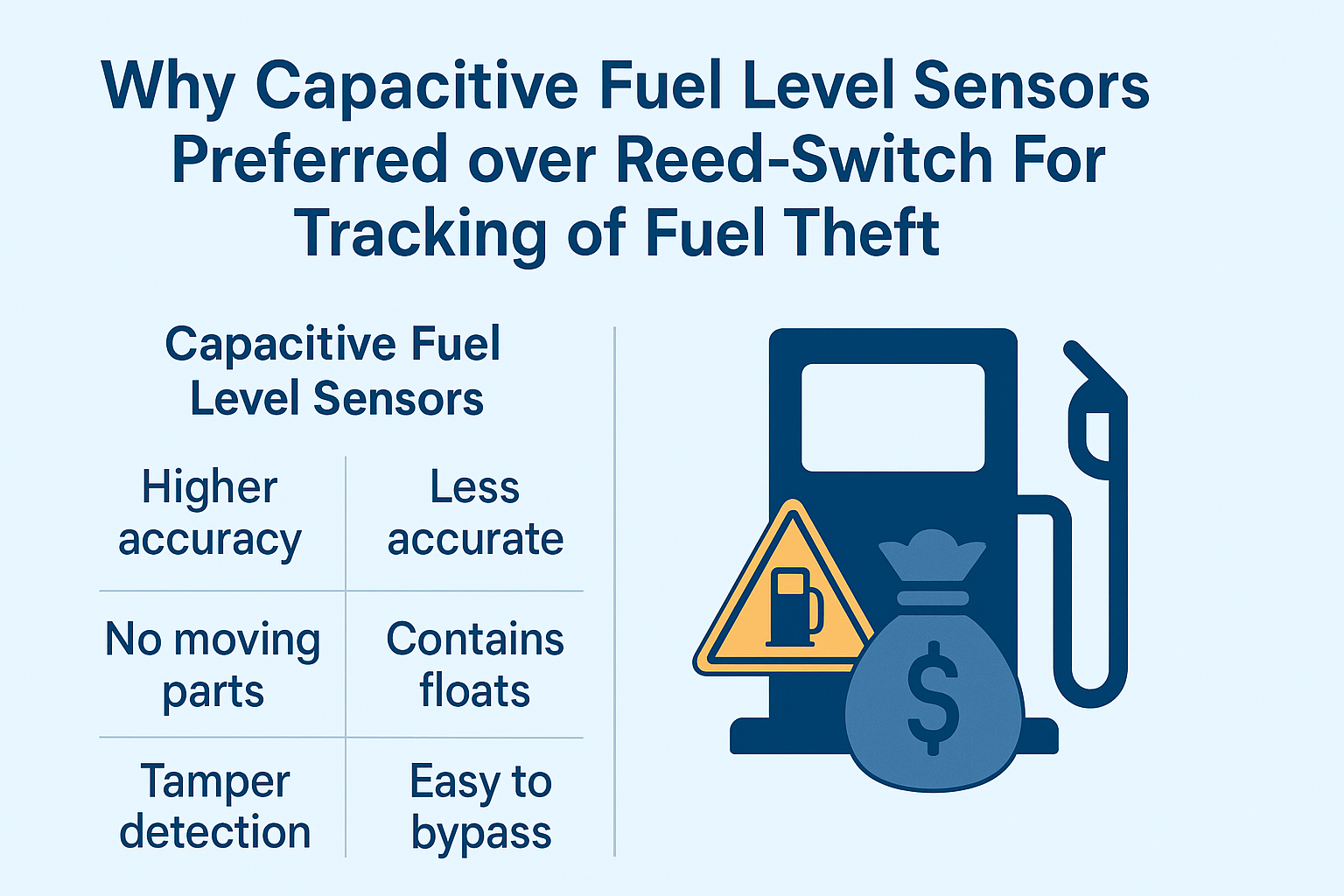
Fuel theft has become a widespread challenge today, affecting fleets, trucks, generators, mining operations, and heavy equipment users alike. With diesel prices rising every year, it’s an issue no one can afford to ignore anymore.
For a long time, reed-switch fuel level sensors were the standard option. They did the job “well enough,” but technology has moved on. Capacitive fuel level sensors have basically taken over with better accuracy, resolution and reliability.
1. How Capacitive Sensors Improved Over the Years
Capacitive sensors weren’t even meant for vehicles originally. They started in industrial tanks where precision mattered more than cost. Slowly, as telematics entered the automotive world, this tech made its way into trucks and heavy equipment.
At first, these sensors were quite simple with metal tubes, analog output, and a lot of manual calibration. Over time, companies began developing smarter versions with digital electronics, better stability, and the ability to program sensor length.
The latest generation is far more advanced. You’ll find:
- Dual-probe systems that adjust themselves
- Temperature-based correction
- Proper RS485 or CAN output
- Better filtering against vibration and electrical noise
This is the point where capacitive sensors really pulled ahead of reed switches.
2. Capacitive vs. Reed-Switch Sensors: What Actually Happens Inside
Capacitive Sensors
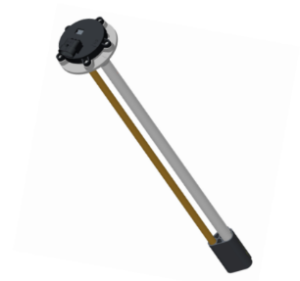
The fuel becomes part of the measurement system. As it rises or falls, it changes the capacitance between two probes. The electronics inside convert this into a continuous reading.
Reed-Switch Sensors
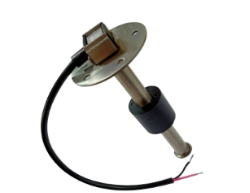
These use a float with a magnet inside the tank. As it moves up or down, it triggers different magnetic switches. The reading jumps in steps rather than gradually. That “stepping” is one of the biggest drawbacks.
Why Capacitive Sensors Usually Win
1. They’re More Accurate
Capacitive sensors give smooth readings. Small changes show up immediately. Whereas Reed switches jump after every few millimeters. Imagine trying to track theft of 1-2 litres with a sensor that only updates after 10-20 litres depending upon tank capacity.
2. No Moving Parts
Anything with a float or magnet is eventually going to stick, jam, or wear out. Capacitive probes are solid-state. Nothing moves, nothing rubs, nothing gets stuck.
3. Better at Catching Theft
Because capacitive sensors pick up small changes, they detect:
- Quick siphoning
- Partial theft
- Tampering
- Even odd refilling behaviour
Reed switches simply can’t capture these micro-changes.
4. They Handle Vibration Better
On a mine truck or even an old diesel generator, vibration is part of life.
Floats bounce around in these conditions — which means wrong readings.
Capacitive probes stay stable.
5. They Last Longer
A good capacitive sensor can run for more than 10 years without much trouble.
6. Easy to Connect to Modern Telematics
Most GPS and telematics platforms just plug into RS485 or CAN.
A Few Downsides
- Capacitive sensors do cost more.
- They also need proper calibration.
- Different fuels (diesel, biodiesel, kerosene mix) can affect readings — unless the sensor compensates for it.
3. What Indication Instruments Has Done Differently
IIL has actually improved capacitive technology in a way that solves some of the usual issues.
Dual-Probe Compensation
Fuel mixtures can change from pump to pump. Biodiesel content especially varies a lot.
IIL uses two probes to automatically adjust for these changes. This helps maintain accuracy without constant recalibration.
Built-In Temperature Compensation
Fuel expands when hot and contracts when cold.
Using temperature correction keeps readings accurate throughout the day and even in places where the temperature shifts drastically.
Stronger, Industrial Build
Things like:
- IP67 / IP69K protection
- Anti-corrosion materials
- Vibration-proof design
make them more reliable in rough environments.
Works With Any Telematics Setup
Whether your system uses CAN or 0.5 –5V integration is straightforward.
Compatible With Different Fuels
Diesel, biodiesel, and ethanol blends all work fine.
Also Read : Mechanical Temperature Gauge Benefits & Why It’s Still a Popular Choice around peoples
4. Extras That Make Capacitive Sensors More Practical
Zero Maintenance
Since there are no moving parts, there’s almost nothing to service.
Better Theft Alerts
A proper capacitive sensor can show sudden drops, unusual refills, and night-time siphoning clearly on a graph.
Real Cost Savings
Fleets that switch over usually report noticeable drops in theft within a few weeks.
Better Data for Analysis
When combined with telematics, operators can track:
- Driver habits
- Route-wise fuel consumption
- Fuel efficiency patterns
Conclusion
When you compare both technologies in real-world usage, capacitive sensors clearly come out ahead, especially when theft detection and accuracy matter. With added features like dual-probe compensation and temperature correction, modern capacitive sensors have become the go-to choice for serious fuel monitoring.
Indication Instruments has helped push this shift by building durable, reliable, telematics-friendly capacitive sensors designed specifically for tough fleet and industrial environments.
FAQs
1. Why are capacitive sensors better for theft detection?
They read continuously and can detect even tiny changes in fuel level.
2. Does temperature affect readings?
Normally yes — but IIL sensors compensate automatically.
3. Can they work with mixed fuels?
Yes, especially with the dual-probe design.
4. How long do they last?
Usually more than 10 years.
5. Are they easy to install?
Yes, they can be cut to size and calibrated easily.
6. Will they work with my GPS tracker?
Most likely yes.